Where Granite Meets Ice: Traversing the Heart of Torres del Paine
Published August 19, 2024 • Field Notes from Chilean Patagonia
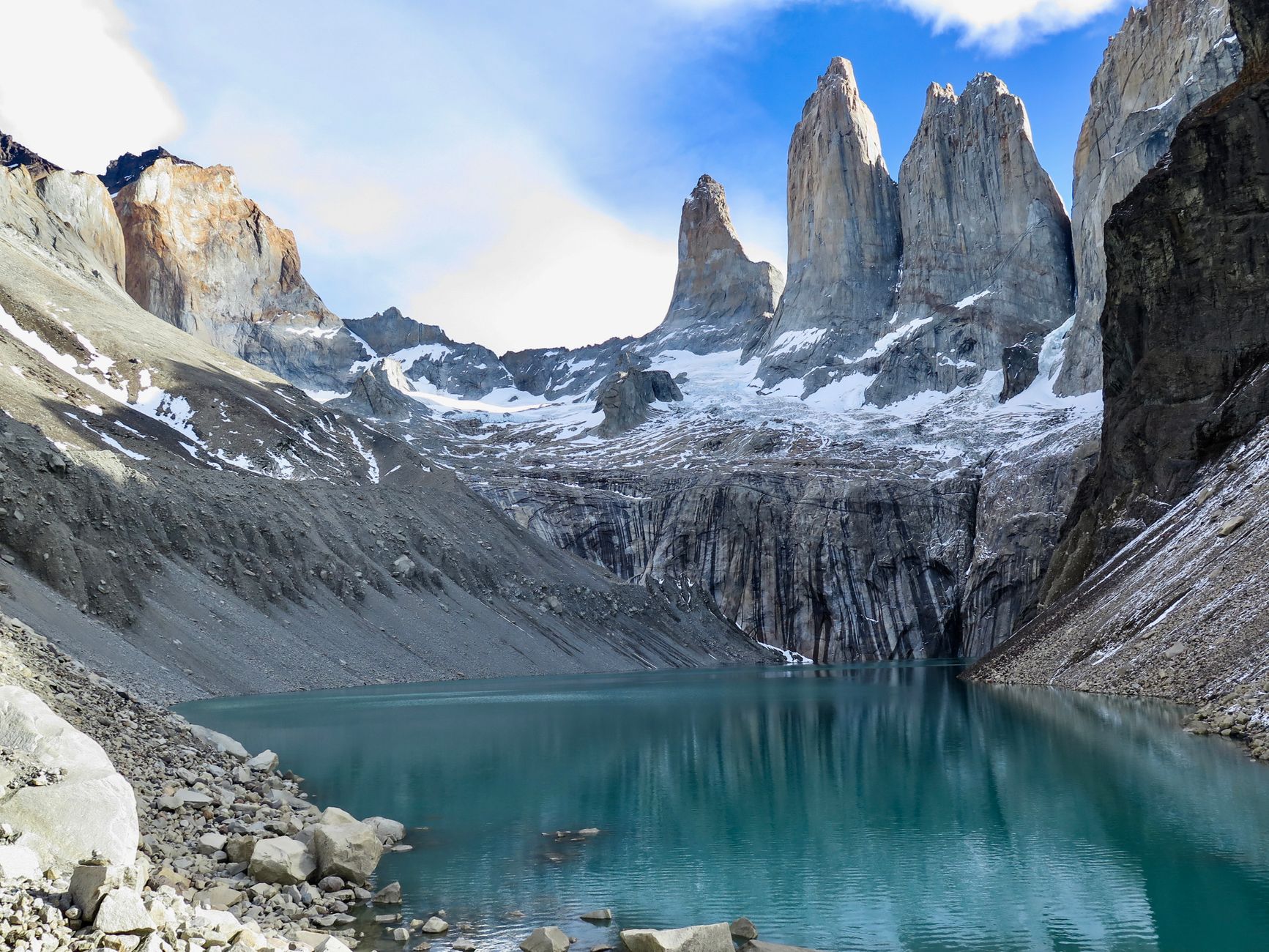
Table of Contents
Few landscapes on Earth command such visceral awe as the Southern Patagonian Icefield. As you journey westward from Puerto Natales, the open windswept pampas suddenly yield to monolithic granite columns rising abruptly 2,500 meters into the sky.
Guanacos graze peacefully alongside roadside streams, while Andean condors circle effortless thermals above sheer cliff faces. The famous Patagonian wind—legendary for blowing hats, tents, and even vehicles off course—arrives in sudden gusts, reminding every traveler that here, humanity is merely an observer.
Beneath the Horns of Paine
Trekking into the French Valley (Valle del Francés), the trail climbs through dwarf beech forests before opening into an amphitheater of black slate and white granite. Every twenty minutes, a thunderous roar echoes across the valley as chunks of hanging ice calve from Mount Paine Grande, tumbling down vertical rock faces into turquoise moraine lakes.
The sensory contrast is extraordinary: bright sunshine one moment, followed by a dramatic squall of snow flurries blown in from the Pacific, then a brilliant double rainbow arcing over Lake Pehoe.
Glacier Grey and the Cathedrals of Blue Ice
Reaching the northern terminus of the trek brings you face-to-face with Glacier Grey, a colossal river of prehistoric ice that stretches thirty kilometers back into the heart of the icefield. Navigating a sea kayak along its perimeter reveals ice walls glowing with deep, surreal cerulean light—a consequence of ancient air bubbles compressed under centuries of immense gravitational pressure.
Drinking pure glacial runoff directly from a mountain stream with your cupped hands gives you an immediate, visceral connection to geological time.
The Edge of Solitude
Patagonia strips away pretense. You return from its trails wind-burned, physically exhausted, and profoundly refreshed. Standing at the end of the Americas, one realizes that the greatest preservation we can grant wilderness is to leave it wild, visiting with quiet reverence.